United States Encaustic Tile Works
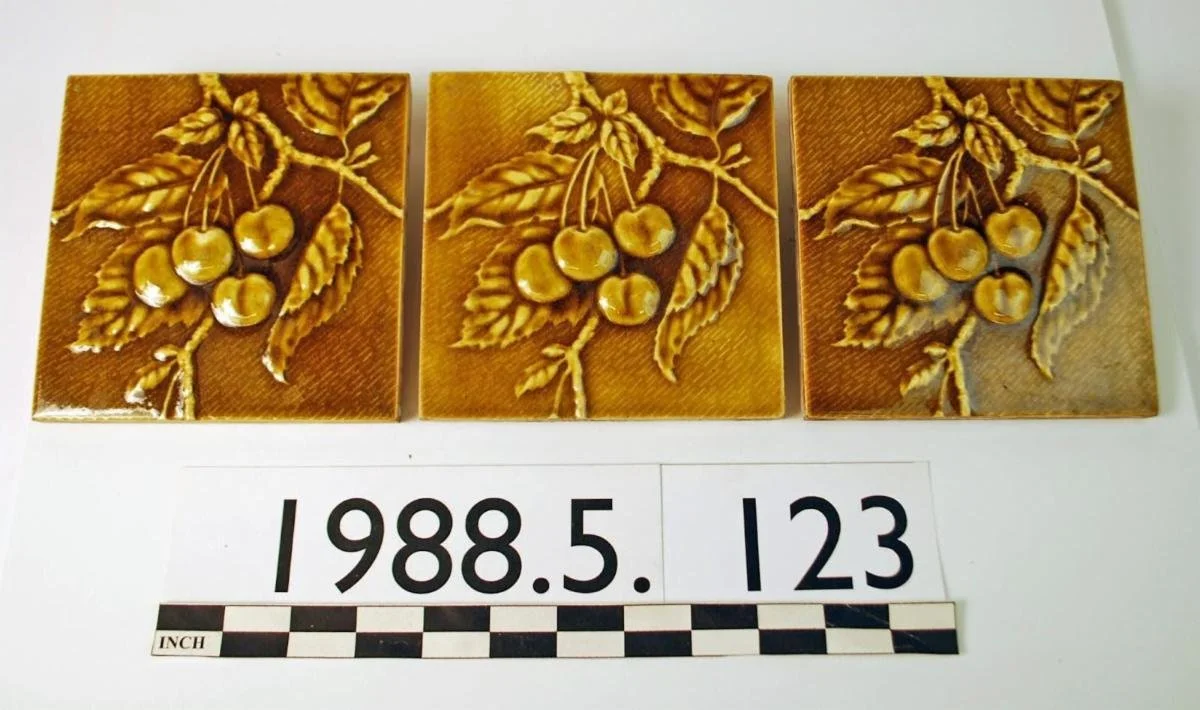
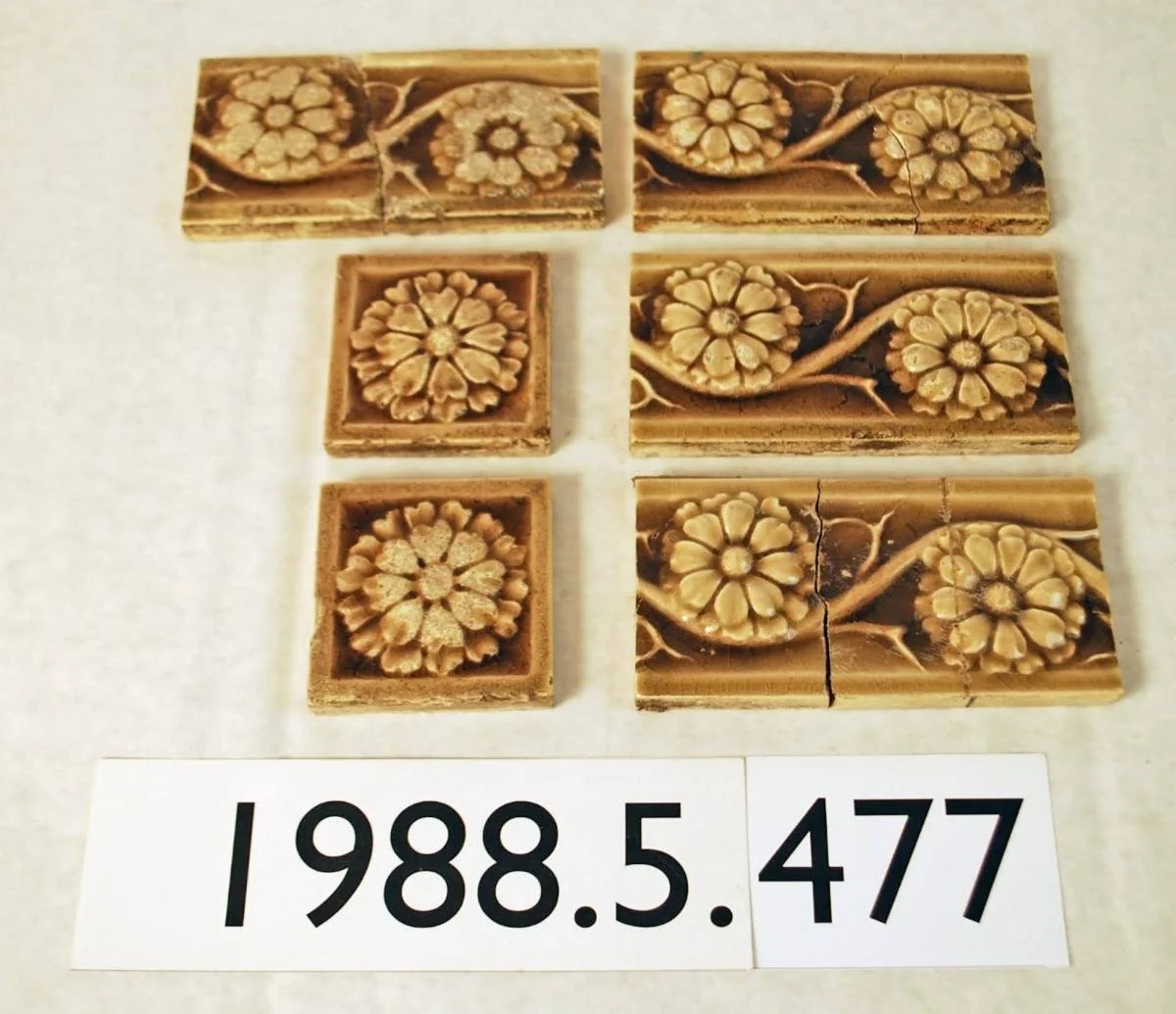
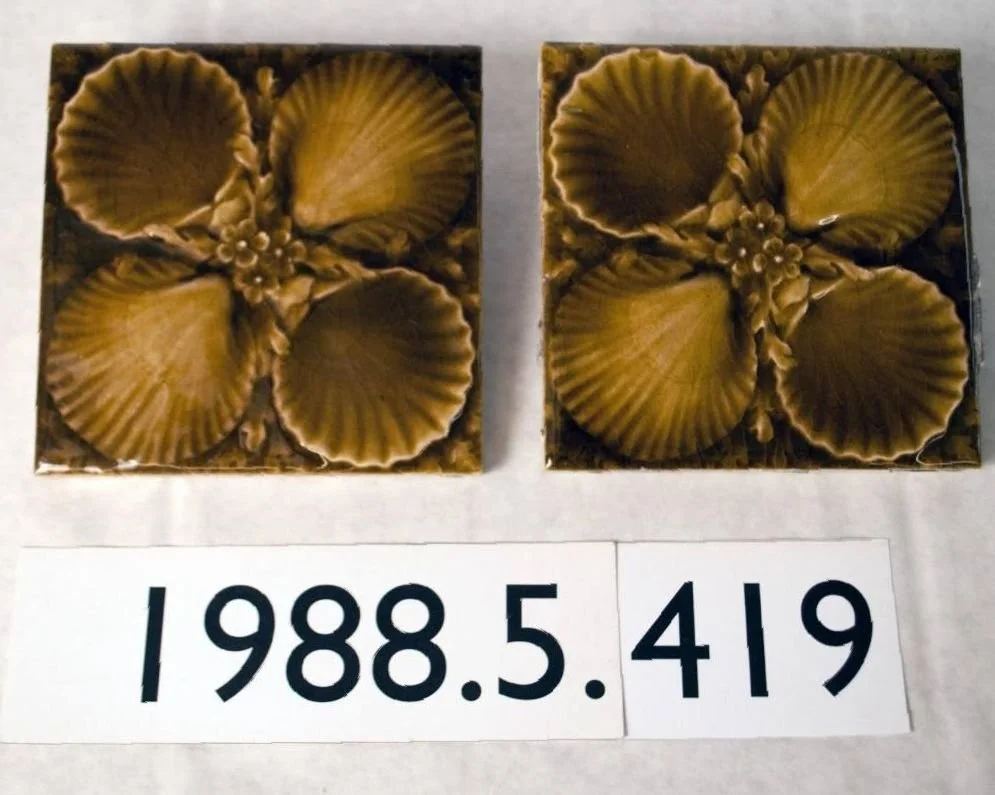
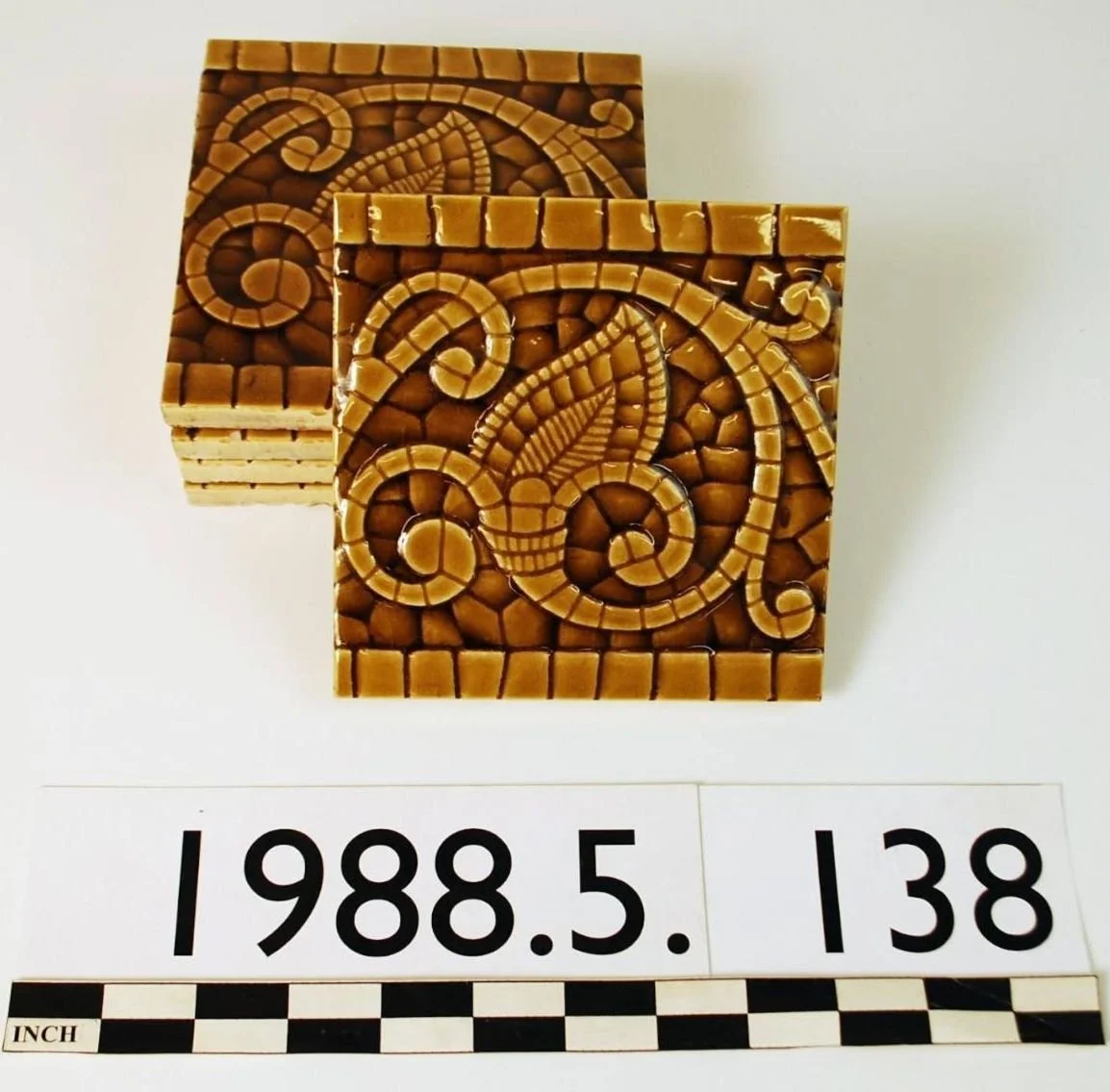
An AHC intern has recently added photographs of some of our tile collection to the collections database. Included are examples from the United States Encaustic Tile Works of Indianapolis, Indiana.
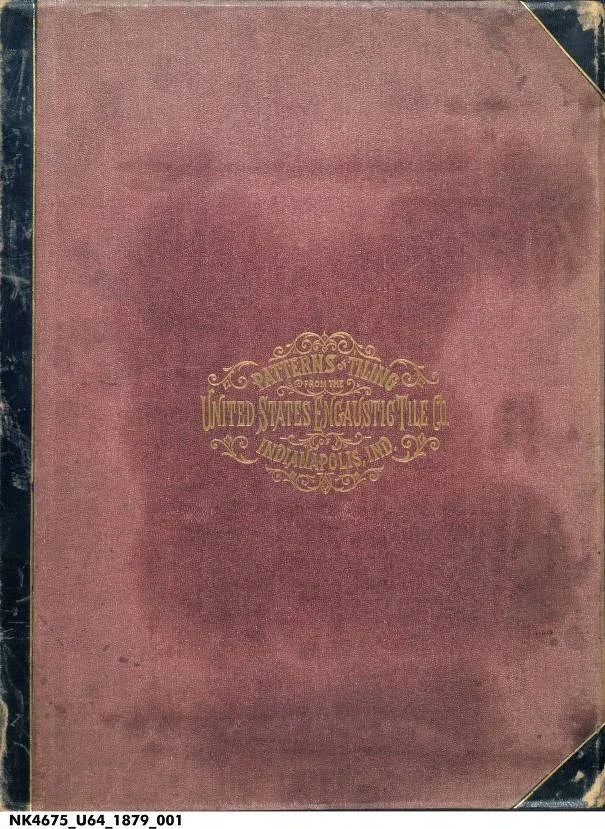
Indiana State Library
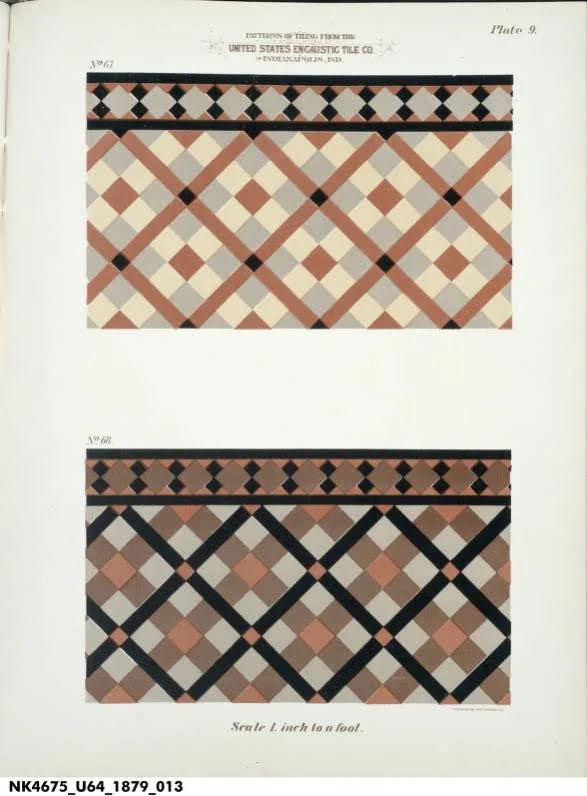
Indiana State Library
In the American Victorian era, decorative fireplace and wall tiles with high relief and wonderful mineral glazes became popular. After visiting the Centennial Exposition of 1876 in Philadelphia, business men, James G. Douglas, Alfred Harrison, W.S. Barkley and F.H. Hall from Indianapolis, Indiana returned home determined to start making tile after seeing the tile displays there.
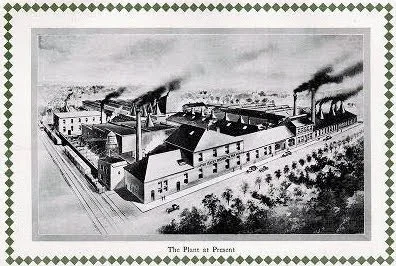
In 1877 the four men started a 20,000 square foot tile making plant with two kilns. Despite a tragic fire on August 9, 1879 that destroyed all of the buildings, the owners persevered and rebuilt.
The first tiles were simple flat pressed tiles with geometric designs meant to be arranged in various geometric patterns. They would go on to make floor, wall and roofing tiles.
As technologies advanced and demand for more elaborate motifs increased, the company's output increased.
It was said that in 1884 the plant was the largest tile works in the world.
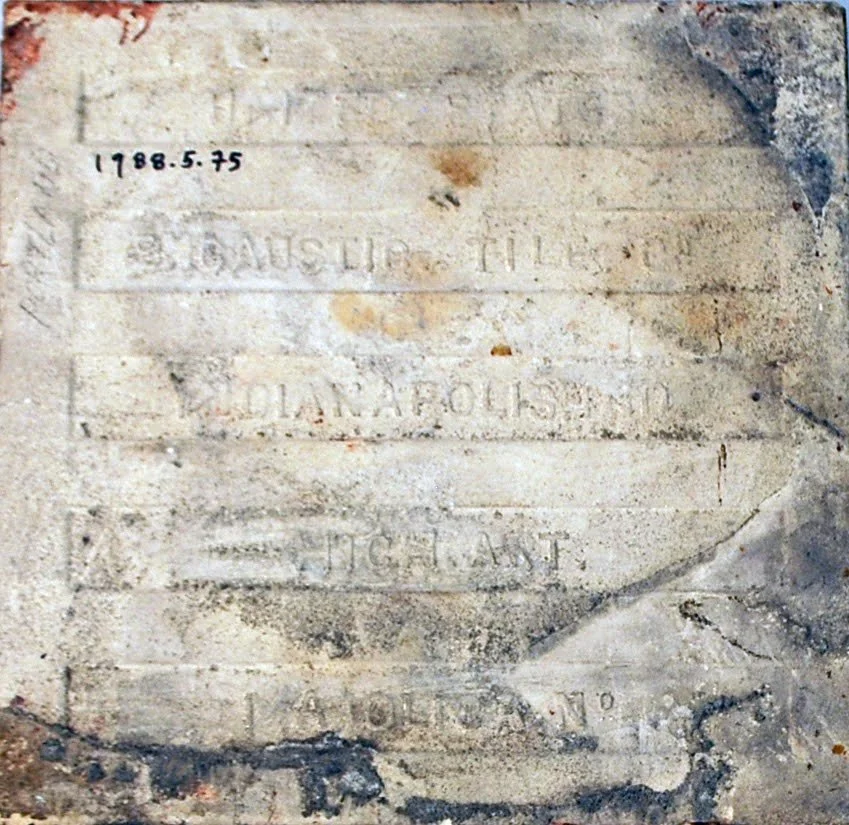
Reverse Inscription of Tile 1988.5.138
By 1927 the company had expanded to 200,000 square feet with 26 kilns including “Jumbo” the largest kiln in the world at the time.The company was purchased by The US Tile Corporation in 1939.
Due to the artful production work of the United States Encaustic Tile Company of Indianapolis, Indiana and the salvage work from our founders, we are fortunate to have beautiful examples of their tile art. A big thank you to our interns that are helping us to share more from our collection with a greater audience!