
WASHINGTON PARK ZOO TRAIN
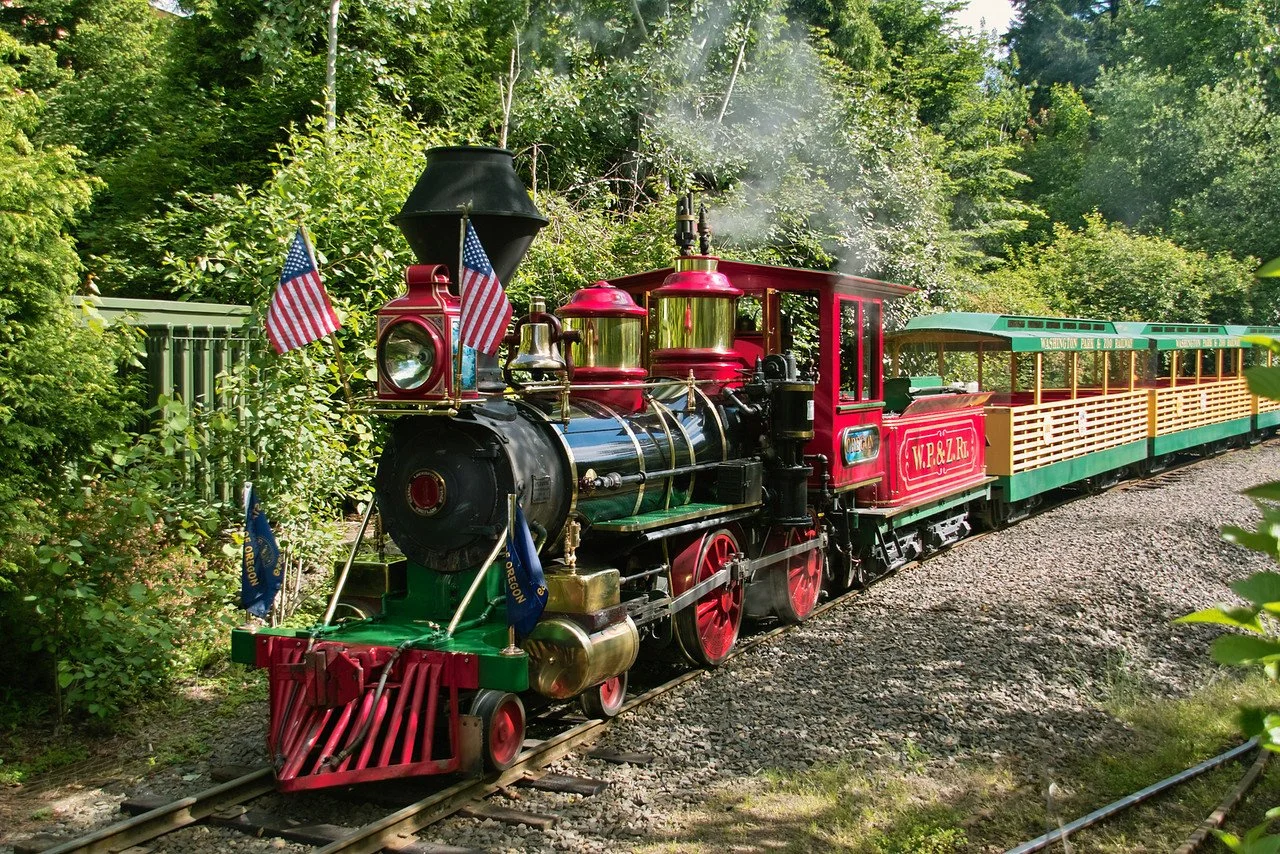
Washington Park, Portland
Updated 9-14-26
Description & Significance:
The scenic Washington Park Loop of the popular narrow gauge zoo railway has been closed since 2013. The train and route are listed on the National Register of Historic Places. Metro, operator of the Oregon Zoo, does not want to operate the scenic Washington Park Loop. The train and tracks are owned by the City of Portland.
Challenge:
Finding a public-private agreement designed to restore the train and assume its operations and maintenance.
History:
The concept of a recreational train affiliated with the zoo arose in 1951, when the administration of Mayor Dorothy McCullough Lee was planning to relocate the Portland Zoo. A bond measure approved in 1954 provided half of the train’s construction funding; the other half was generated by contributions from nearly 25,000 individual and corporate donors.
Construction of the 5/8-scale railroad was coordinated by volunteers from seven private railroads, railroad engineers and construction firms. Tracks were laid in the traditional style: steel T-shaped rails on wooden ties laid in heavy gravel ballast.
Operations started within the zoo in 1958, followed by expansion into the Washington Park loop in 1960. In the early 1960s, the train was carrying 300,000 passengers per year. Popular night-time rides occurred during the Halloween and Christmas holidays when illuminated displays were placed along the route.
A survey in 1990 found that the zoo railway was the longest and most successful recreational train in the United States. Train operations included five engines, the most popular being a diesel-driven aerodynamic modern-looking Zooliner and a historic iron-horse style engine powered by steam.
The curving Washington Park loop carried visitors to the International Rose Test Gardens and provided scenic views of Mt. St. Helens, making the trip popular for tourists and Portland-area residents.
Trips to the loop ended in 2013 when management of the zoo reconfigured use of the zoo’s animal enclosures. Zoo managers thought operating a train through Washington Park was not consistent with the zoo’s primary mission of exhibiting and caring for animals. Another critical issue was how to pay for track maintenance for a route that included both zoo and City of Portland land.
Preferred outcome:
City of Portland and Metro should reach an agreement for an independent non-profit entity to operate and maintain the Washington Park Loop. The popular train has always been a profit-maker until the loop’s closure because of physical changes in the zoo.
Current Status and Timing:
Portland City Council Vice President Olivia Clark and Metro Councilor Christine Lewis are co-chairing an Oversight Committee examining whether and how the Rose Garden Loop can be restored as a financially sustainable community asset. With representatives from Portland Metro, and the Friends, the new committee recently held its first meeting to begin evaluating the railway’s condition and develop restoration and operating plans—what we are calling Phase
One of the restoration effort.
Decision maker:
Portland City Council and Metro Board of Directors.
Action needed:
While planning continues to unfold, the Friends group is hosting information booths at community street fairs and gratefully accepting donations to fund the feasibility study.
Find more information: